Home » Greco-Roman Period » Hellenism and Hellenistic Trends in Judaism
Hellenism and Hellenistic Trends in Judaism
The Talmudic version of the meeting of the Jews and Alexander is preserved in a baraita which correctly identifies the place of the meeting as Antipatris. This version also points to the Jewish-Samaritan conflict and to Alexander’s recognition of the Jews and rejection of the Samaritans. Surely it was taught:The twenty-fifth of Tebeth is the […]
The story of the ascension of Joseph, the Tobiad, as a tax farmer in the Ptolemaic period, illustrates the rise of a new Hellenistic Jewish elite which gained power through Hellenization and which, in turn, fostered further Hellenization of the society. It is probable that this romantic account was take over by Josephus from an […]
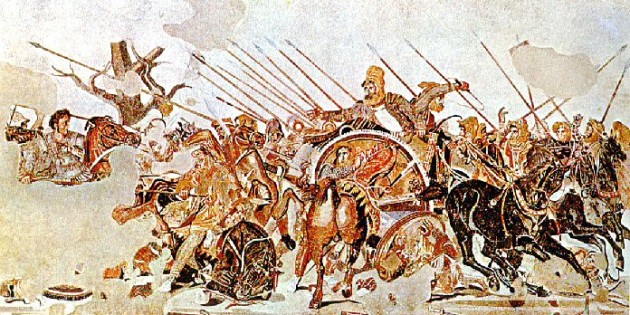
Josephus transmits what must have been an old tradition regarding early contacts between the Jews and Alexander the Great. This legendary account portrays the rival of the Jews and the Samaritans while claiming that Alexander paid homage to the Jewish high priest to whose intercession he credited his military victory. 4. But Sanballat thought he […]
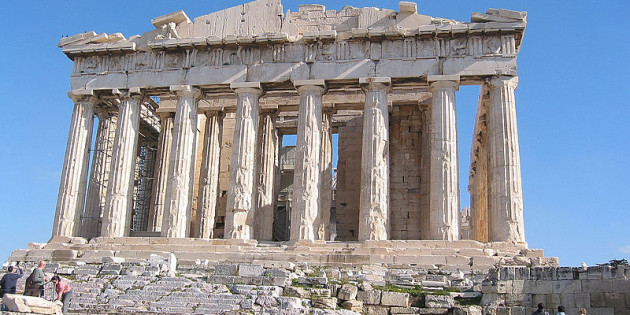
The Parthenon was a temple on the Athenian Acropolis in Greece, dedicated to the goddess Athena, whom the people of Athens considered their patron. Construction began in 447 BCE when the Athenian Empire was at its peak and was completed in 438 BCE.
For nearly 600 years, some Jews tried to remove the mark of the covenant “Any uncircumcised male who is not circumcised on the flesh of his foreskin shall be cut off from his people; he has broken my covenant.” So said God to Abraham, establishing the covenant of circumcision, a covenant “between me and you […]
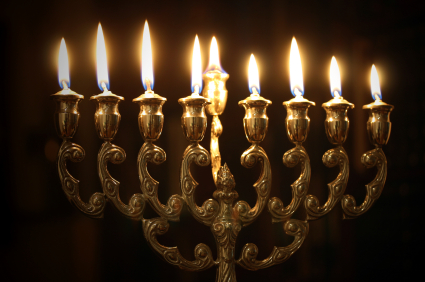
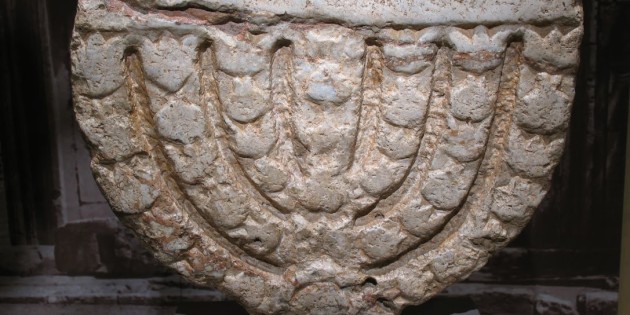
The holiday of Hanukah, celebrating the Jewish victory over the Seleucids and the rededication of the Temple in 164 B.C.E., was observed by the lighting of lamps, symbolizing the relighting of the Temple menorah. The Babylonian Talmud explained the significance of the festival and detailed its observance. Our Rabbis taught- “The commandment of Hanukkah is […]
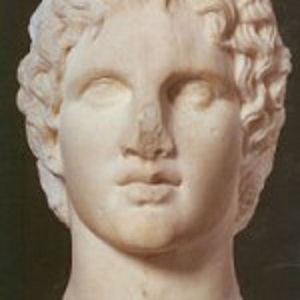
Excerpted from Ancient Israel From Abraham to the Roman Destruction of the Temple. Ed. Hershal Shanks. Washington, D.C.- Biblical Archaeology Society, 1999. Alexander the Great changed the face of Judea along with the rest of the then-known world. He reigned as emperor from 356 to 323 B.C.E. In 336 B.C.E. he became king of Macedonia and of […]
Excerpted from Lawrence H. Schiffman, From Text to Tradition- A History of Second Temple & Rabbinic Judaism, Ktav Publishing House, Hoboken, NJ, 1991. It was not long before the inexorable progress of Greek cultural influence led to demands for a Hellenistic reformation of Judaism (ca. 175 B.C.E.) and subsequently to the Maccabean Revolt (168–164 B.C.E.). The two […]
Excerpted from Lawrence H. Schiffman, From Text to Tradition- A History of Second Temple & Rabbinic Judaism, Ktav Publishing House, Hoboken, NJ, 1991. The cultural phenomenon that we call Hellenism had a lasting impact on Judaism and the Jewish people. Hellenism was a synthesis of Greek (Hellenic) culture with the native cultures of the Near East. It […]
From Text to Tradition Hellenism as Cultural Phenomenon Hellenistic Trends in Palestinian Judaism Historical surveys Lee I. Levine. “The Age of Hellenism- Alexander the Great and the Rise and Fall of the Hasmonean Kingdom.” Primary sources Babylonian Talmud Yoma 69a – The Meeting of Alexander and the High Priest Josephus, Antiquities XI, 321-47- Alexander and […]