Zionist Milestones, The Jewish Agency for Israel, 2001.
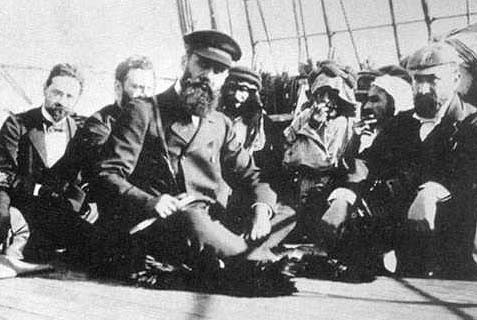 May 2, 1860
Birth of Benyamin Zeev Herzl, founder of political Zionism and the visionary of the State of Israel.
June 15, 1870
Karl (Charles) Netter settles in a cave south of Jaffa and lays the cornerstone of the Mikveh Israel school, the first Jewish settlement in Israel of the modern era.
June 5, 1881
Start of first aliya of Jews of Yemen.
January 11, 1882
First conference of Hovevei Zion (“Lovers of Zion”) in Romania resolves to purchase land in Israel and promote aliya. The same year witnesses the start of the First Aliya and the establishment of Rosh Pina and Zichron Ya’akov.
January 21,1882
Formation in Kharkov, Ukraine of a group of young people dedicated to the revival of the Jewish people through a return to working the land in Israel. The group came to be known as the Bilu.
March 18, 1882
Creation of Va’ad Halutzei Yesod Hama’alah (“Yesod Hama’alah Pioneers Committee”), committed to helping purchase land in Israel to establish Jewish colonies.
April 28, 1882
Turkey forbids Jewish immigration to Israel.
June 18, 1882
Nes Ziona established.
July 6, 1882
First 14 members of the Bilu arrive in Jaffa; the date is regarded as the start of the First Aliya (1882-1903), when 25,000 Jews immigrated to Israel, largely from Russia and Romania.
July 31, 1882
Establishment of Rishon leZion, first colony of the First Aliya.
September 28, 1882
Baron de Rothschild agrees to support settlement in Israel. In a meeting with Rabbi Mohliver, he agrees to establish a colony in Israel as part of the efforts to save Russian Jewry.
October 17, 1882
“Autoemancipation,” Zionist pamphlet by Yehuda Leib Pinsker published in Berlin, calls on Jews to settle in their homeland.
December 12, 1882
Two years after a failed effort by Jews from Safed to establish the village of Gai Oni on the same site, the agricultural land of Rosh Pina, a village founded by immigrants from Romania, is ploughed for the first time.
July 12, 1883
Baron Edmond de Rothschild starts his activities in Israel.
November 7, 1883
Mazkeret Batya established, and named for the mother of Baron Hirsch.
June 12, 1884
Members of Hovevei Zion from Poland establish Yesod Hama’alah.
September 12, 1884
Moshav Ekron established, the sixth colony of the First Aliya.
February 12, 1886
First daily newspaper in Hebrew published in St. Petersburg.
April 25, 1886
Founding of Neve Zedek, first Jewish neighborhood on the outskirts of Jaffa.
June 28, 1887
Second Congress of Hibat Zion meets in Russia. The resolutions- to establish colonies in Israel and purchase additional land.
May 26, 1888
B’nai B’rith, founded in 1843, establishes an office in Jerusalem, its first in Israel.
September 13, 1888
Be’er Tuviya is established for the first time.
February 8, 1889
Bnei Moshe, secret arm of Hovevei Zion, created under the leadership of Ahad Ha’am.
September 16, 1889
Decision to establish the new Committee for the Hebrew Language, which worked to develop and advance the language. In 1953 it became the Academy of the Hebrew Language.
April 1, 1890
Natan Birnbaum coins a new word, “Zionism,” in an article in his newspaper, Shichrur Atzmi (“Self Liberation”).
September 1890
Kibbutz Mishmar Hayarden established.
September 10, 1891
Baron Hirsch establishes JCA – Jewish Colonization Association.
September 26, 1892
First railway in Israel inaugurated – from Jaffa to Jerusalem.
February 14, 1896
Publication in German in Vienna of a pamphlet, “The Jewish State,” in which Herzl discusses the Jewish question and suggests a homeland for the Jewish people as the solution.
February 15, 1896
Mikveh Israel agricultural school established.
May 19, 1896
Establishment of Metulla, northernmost settlement in Israel.
August 29-31, 1897
First Zionist Congress, led by Herzl, meets in Basel. World Zionist Organization established; Herzl elected president.
May 4, 1898
Zionist Organization of America founded in New York; the first Zionist organization in USA.
August 28-31, 1898
Second Zionist Congress meets in Basel.
August 15-18, 1899
Thrid Zionist Congress meets in Basel.
August 13-16, 1900
Fourth Zionist Congress meets in London and discusses the problems facing the Jewish people at that time.
May 17, 1901
Herzl meets the Turkish sultan, Abdul Hamid II, and asks permission for Jewish settlement in Israel in exchange for help in repaying Turkey’s international debts. His request is rejected. Turkey announces that it will allow Jewish settlement in Africa, but not in Israel.
October 7, 1901
Yavne’el established in the Lower Galilee.
October 25, 1901
Kfar Tavor, originally called Mescha, established in the Lower Galilee.
December 29, 1901
Fifth Zionist Congress in Basel decides to establish Keren HaKayemeth leIsrael, the Jewish National Fund, in order to purchase land in Israel for the Jewish people.
January 28, 1902
Opening of Sha’are Zedek, the first hospital in the new city of Jerusalem.
February 1902
Anglo-Palestine Bank established in London as the financial arm of the World Zionist Organization’s activities.
March 5, 1902
Establishment in Vilnius of the Mizrachi movement for religious Zionist Jews.
March 25, 1902
Zionist survey committee, sent by Herzl to examine the suitability of the Sinai peninsula for Jewish settlement (El-Arish Plan), completes its work.
July 7, 1902
Start of official contacts between the Zionist movement and the British government. Herzl appears before the Royal Commission on Alien Immigration in London.
October 5, 1902
Altneuland, Herzl’s utopian novel that describers the future Jewish state, published in German in Vienna, and shortly thereafter appears in Hebrew translation as “Tel Aviv.”
March 6, 1903
Establishment of the village of Rehovot.
April 19, 1903
Pogrom against the Jews of Kishinev, main city of Bessarabia (now Moldova). Creates renewed impetus to emigrate to the west or make aliya to Israel.
April 23, 1903
In a meeting between Herzl and the British Minister for the Colonies, Chamberlain, the idea of a Jewish homeland in Uganda is raised.
August 14, 1903
British government offers the World Zionist Organization the Uganda Plan, the creation of a Jewish home in East Africa under British rule.
August 23-25, 1903
Sixth Zionist Congress, the “Uganda Congress.”
November 11, 1903
Large land purchase by Keren HaKayemeth at Delaika and Umm Juni. Kibbutz Deganya Aleph is established on these lands.
Tammuz 2, 5664 (July 3, 1904)
Death of Benyamin Zeev Herzl
February 24, 1921
(Adar 13, 5680) Yosef Trumpeldor and his comrades fall at Tel Hai.
December 2, 1926
Kibbutz Mishmar HaEmek established by Kibbutz Artzi-Hashomer Hatzair at the western edge of the Jezreel Valley.
January 12, 1927
Death of Ahad Ha’am (Asher Ginzburg), philosopher, writer and leader, one of the founders of Hovevei Zion and modern Zionism, creator of the concept of a “spiritual center” in Israel.
January 16, 1927
Establishment of the Ben Shemen youth village.
January 17, 1927
Agreement between Dr. Chaim Weizmann and Louis Marshall, a leader of American Jewry, for the establishment of the Jewish Agency for Israel.
April 1, 1927
Kibbutzim of Hashomer Hatzair and their training centers create a national network, Kibbutz Artzi in Haifa.
April 24, 1927
Creation of Betar (Yosef Trumpeldor Union) in Israel.
July 11, 1927
Strong earthquake hits Israel; heavy damage in Safed and Shechem, and slightly less in Jerusalem.
August 5, 1927
Establishment of the “United Kibbutz” movement, umbrella organization of the kibbutzim in Israel. In 1951, the organization split into two movements that were reunited in 1979 as TAKAM (United Kibbutz Movement).
November 1, 1927
British Mandate issues its own local currency – mil, grush, shilling and pound – after decades of using Egyptian currency and generations of using Turkish currency.
June 29, 1928
Kibbutz Giv’at Brenner founded by pioneers from Italy – one of the largest kibbutzim in Israel.
Tammuz 29, 5700 (1940)
Death of Ze’ev Jabotinsky.
February 27, 1951
Establishment of the new town of Ashkelon.
March 11, 1951
Start of Operation Ezra and Nechemia, airlift to Israel of the Jews of Iraq.
July 15, 1951
Completion of Operation Ezra and Nechemia that brought 114,000 Jews from Iraq to Israel.
July 27, 1951
Nahal Oz, first outpost created by Nahal (“Fighting Pioneer Youth,” army service that combines military service with land settlement), established opposite the Gaza Strip, close to the border. Today it is Kibbutz Nahal Oz.
August 14, 1951
23rd Zionist Congress meets in Jerusalem, the first time such a meeting is held in Israel. Its 445 delegates replace the Basel Plan (establishment of a national homeland) with the Herusalem Plan (strengthening the country).
November 1, 1951
Egged Transport Cooperative established as the union of three local companies.
December 4, 1951
Creation of Sderot and Kiryat Malachi, towns that evolved out of ma’abarot (immigrant transit camps).
January 9, 1952
Law for Reparation from Germany approved in the Israeli Knesset (parliament).
January 16, 1952
Start of Operation Koresh to bring Iranian Jews to Israel.
March 3, 1952
Cotton sown in Israel for first time.
April 1, 1952
Establishment of Tahal, Israel Water Planning, by Israeli government, Jewish Agency and Keren Kayemeth.
May 13, 1952
First class of medical students graduate from the Hebrew University.
September 10, 1952
Holocaust reparations agreement signed in Luxembourg. The West German government agreed to pay the State of Israel DM 3 billion within 12 years, and a further DM 450 million to Jewish Holocaust survivor organization in the rest of the world.
November 18, 1952
Jewish physicist Albert Einstein rejects David BenGurion’s offer to leave his home in the USA and become Israel’s second president, following the death of Chaim Weizmann.
November 24, 1952
Law of Status of the World Zionist Organization passed in the Knesset. This law confers legal basis to the Jewish people’s attachment to Israel and authorized the WZO leadership to work to advance aliya, klita and settlement of the land.
November 30, 1952
Migdal HaEmek established by a group of immigrant families.
December 10, 1952
Second president of Israel, Yitzhak Ben-Zvi, sworn in. He was to be re-elected president twice and se4rved in office until his death.
May 14, 1953
New railway link running along the coast from Tel Aviv to Haifa inaugurated.
June 3, 1953
Laying of cornerstone of Bar Ilan University in Ramat Gan- its uniqueness was to lie in the fact that Jewish studies would be compulsory, and the campus would operate according to a Jewish rhythm.
October 17, 1953
Eric Johnson, US President Eisenhower’s special envoy, arrives in Israel to try and find a solution to the escalating tension between Israel and Syria over rights to the waters of the Jordan River and construction of the National Water Carrier. A regional water plan is never realized.
October 22, 1953
First pre-military boarding school opens in Haifa, attached to the city’s Reali high school.
April 7, 1977
Maccabi Tel Aviv, Israel’s champion basketball team, wins the European Cup competition.
June 10, 1977
Israeli shipping vessel rescues 66 Vietnamese refugees. As a humanitarian gesture, Israel’s prime minister elect, Menachem Begin, grants them asylum in Israel.
June 15, 1977
Israel Airports Authority established.
November 19, 1977
Egypt’s president, Anwar el-Sadat, arrives in Israel for a three-day visit. On the day after his arrival he addresses the Knesset and declares a turning point in Egypt’s attitude to Israel and a desire for peace.
December 12, 1977
Inauguration of the first Jewish school in Madrid since the expulsion of the Jews from Spain in 1492, in the presence of Rabbi Ovadia Yosef, former chief Sephardi Rabbi of Israel.
December 28, 1977
Knesset approves the framework developed by the government for peace talks with Egypt. This includes the concept of autonomy for the Palestinian people.
March 15, 1978
Start of Operation Litani in South Lebanon to crush the terrorist infrastructure and expel it from the border area.
May 15, 1978
Beit Hatefutsoth, the Museum of the Jewish Diaspora, inaugurated in Tel Aviv. The Jewish Agency is one of the founding partners.
July 11, 1978
Israel’s first modern highway, Road No.1, linking Tel Aviv to Jerusalem, opened.
July 17, 1978
Natan Sharansky sentenced to 13 years’ imprisonment in USSR.
March 27, 1987
Tens of refuseniks in the USSR participate in a Passover seder in the American Embassy in Moscow; a central event in the struggle to open the gates to immigration.
April 6, 1987
First visit of an Israeli president to Germany- President Chaim Herzog hosted by President Richard von Weizsacker.
October 13, 1987
Ida Nudel, former prisoner for Zion and refusenik, arrives in Israel after a prolonged struggle to leave USSR.
March 19, 1988
Soviet authorities allow an Israeli plane to fly over its territory for the first time, a sign of perestroika and the changing Soviet attitude to Israel and the Jews.
May 25, 1991
Completion of Operation Solomon, the airlift to Israel of 14,500 Ethiopian Jews in 36 El Al and IDF airplanes in as many hours.
August 22, 1991
First pair of F-16 aircraft received by the Israel Air Force in a special ceremony.
October 7, 1991
First direct flight from USSR to Israel brings 150 new immigrants.
October 18, 1991
USSR renews diplomatic relations with Israel after severing them 24 years earlier during the Six Day War.
October 30, 1991
Peace Conference meets in Madrid under the auspices of the USA and USSR, with the participation of Israel, Syria, Lebanon, and a joint Jordanian-Palestinian delegation. Participants disperse after five days without setting a time or place for the next meeting.
December 16, 1991
General Assembly of the United Nations votes by 111 to 25 that Zionism is not racism, thereby rescinding the resolution to that effect passed in 1975.
February 16, 1992
Death of Menachem Begin, former prime minister, commander of IZL (pre-state underground movement) during the struggle for the creation of the state, leader of Revisionist movement and Likud.
February 18, 1992
Ma’ale Adumim, settlement established east of Jerusalem, becomes a town.
August 23, 1993
After secret talks in Oslo, Israel and the PLO sign the draft of a Declaration of Understanding.
September 13, 1993
Framework agreement signed in Washington between Israel and PLO that includes mutual recognition, establishment of a Palestinian Authority, and transfer of parts of the West Bank and Gaza to its control.
September 11, 2001
Terror attack on the United States- two hijacked passenger jets crash into the Twin Towers of the World Trade Center in New York. Shortly after, the buildings collapse. A third hijacked plane crashes into the Pentagon in Washington, while the passengers of a fourth plane crash it into the Pennsylvania countryside to prevent the terrorists from causing further destruction. Thousands killed. USA declares war on terrorism and launches a military operation in Afghanistan.
Based on “The Jewish Agency for Israel Annual Report for 2001.”
Subscribe
If you enjoyed this article, subscribe to receive more just like it.


